 United States
 Canada
 United Kingdom
 Germany
 Netherlands
 India
India Singapore
 Hong Kong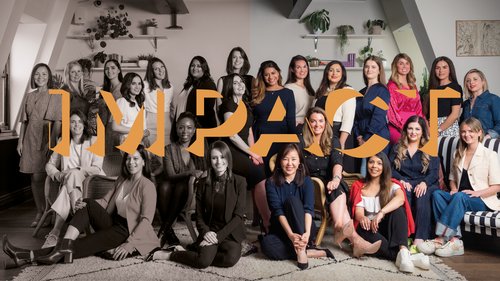
Listen to our special podcast episode to hear Haymarket employees globally share what ’embrace equity’ means to them
Embracing equity means creating an inclusive world. Acknowledging that we don’t all start from the same place and we need to do better in creating the conditions for everyone to thrive.
As a global media business, Haymarket recognises it is in a unique position to use our power and influence to drive meaningful change, and lead by example. With a 50% female workforce, Haymarket announced it has committed to carrying out a global gender balance audit, as part of its Impact goals.
Thank you those at Haymarket who contributed to the podcast with their insightful contributions: Kevin Costello, Rachael Prasher, Atifa Silk, Mike Graziani, Kwamesha Joseph, Nihal de Silva, Inidra Vergis, Alison Yung, Tammy Chernin, Tara Hill, Lynne Callea and Renuka Kirpalani. Also to Lucy Shelley for being a great host.
You can read the full transcript below.
Haymarket podcast transcript, International Women’s Day 2023
[Lucy Shelley]
Hello and welcome to Haymarket’s first ever International Women’s Day podcast. I’m Lucy Shelley, Multimedia Editor at Performance Marketing World and host of our Attention Seekers podcast.
Today we are hearing from 12 employees around the world at Haymarket, spanning our UK, US, Hong Kong and India offices, to hear their thoughts around embracing equity, the progress and challenges around gender equality and the importance of female role models.
‘Embracing Equity’ is the official theme for this year’s International Women’s Day. This means creating an inclusive world, acknowledging that we don’t all start from the same place and we need to do better in creating the conditions for everyone to thrive.
The road for equality for women belongs to no single feminist, nor to any one organisation, but to the collective efforts of all who care about human rights.
Forging gender equity isn’t limited to women solely fighting the good fight. Allies are incredibly important for the advancement of women, and we have men getting involved in the discussion too. So, let’s get started.
You’ll be hearing from…
In the UK:
- Rachael Prasher, Managing Director of Haymarket Automotive
- Nihal de Silva, Digital Strategy Director of Wonderly
And in Asia:
- Atifa Silk, Managing Director of Haymarket Asia
- Inidra Vergis, Editor at AsianInvestor
- and Alison Yung, Events Director
In India we’ll be hearing from Renuka Kirpalani, The Autocar Show Editor
And in the US…
- Tammy Chernin, PRI General Manager
- Mike Graziani, President, Medical Communications Division
- Tara Hill, Senior Marketing Director
- Kwamesha Joseph, Junior Editor, Haymarket Medical Network, US DEI Committee Chair
- Lynne Callea, Vice President and director, CME Program Management
And finally, from Kevin Costello, our Global Chief Executive.
First, we’re looking at the official theme of International Women’s Day embracing equity.
We ask the group everything from what embracing equity means on a personal level and in the workplace to the importance of intersectionality and more.
[Rachael Prasher]
I think intersectionality is incredibly important when we are facing the challenge around embracing equity.
Gender is not a minority issue. You know, women are roughly 50% of the population. So I think you have to take that as your first challenge, but I think it’s impossible to ignore the additional challenges that are presented by intersectionality, be that women of colour, women with a different sexual orientation, women from different socioeconomic backgrounds, whatever it might be.
I think it makes the challenge of achieving equity even more difficult and actually thinking about it on that basis takes it away sometimes from being just a gender issue, which I think is really, really important.
I’m not going to reel off lots of data now, but there are a huge number of studies that talk about the massive underrepresentation of women of colour, for example, particularly on FTSE boards.
And it’s not as though women are doing particularly brilliantly there anyway, and actually the importance of having female role models who are representative of other minority groups is incredibly important, even though it’s not just a women’s issue, obviously. That question of representation crosses all genders.
But I do think that it’s important to keep in mind the other challenges that women are facing other than just the gender challenge alone.
[Tammy Chernin]
To me, embracing equity is ensuring fair treatment opportunities and access for all people.
I also believe you cannot embrace equity without intersectionality. Acknowledging that everyone may have their own unique experiences of discrimination and oppression, and we must take into consideration factors that can marginalise people: their gender, race, socioeconomic class, sexual orientation, physical appearance etc.
For example, a black woman may experience misogyny and racism, but she will experience misogyny differently from a white woman and racism differently from a black man. By raising awareness of intersectionality, we can better acknowledge the differences among us, become better listeners, and understand views from others that don’t mirror our own background and experiences.
[Kwamesha Joseph]
Acknowledging the complexities of intersectionality is a vital component to embracing equity. All of the different facets of our identity are inextricably intertwined and they shape the way that we navigate the world and what we need to see in order to feel empowered.
Any long-term goals toward equity in general would require us to recognise that we’re all starting from completely different places and that our needs are going to be different. So while the need for equity is universal, the solutions that we use in order to get there aren’t going to be universal.
[Kevin Costello]
‘Embracing Equity’ recognises the fact that we don’t all start from the same place.
Because of this, we all need to do better in creating the conditions for everyone to thrive.
International Women’s Day provides an opportunity for us to reflect on how as an individual, and as a business, we can better support women in achieving their full potential.
Just last week we launched Haymarket Impact and our alignment with our chosen UN Sustainable Development Goals, one of them being Goal 5, Gender Equality.
The United Nations Sustainable Development Agenda, set a 2030 deadline for the achievement of gender equality and the empowerment of all women and girls.
Now, with under 10 years left, the world is not on track to achieve this.
This only serves as a disappointing reminder of just how far we have to go and how crucial it is that we act now in making a positive change for all women. As a business it starts with our own employees but we also have a role to play in influencing our communities, our audiences.
Embracing equity is the only way we will achieve gender equality.
[Renuka Kirpalani]
I think the meaning of ‘embracing equity’ has really changed over the years. Initially it used to be a male versus female, but it’s no longer just that, is it?
It’s become so many more things, so many more pronouns have emerged and it’s critical that we keep an open mind and we realise that people are very different, and everyone has their own different qualities – we need to embrace that difference. We need to let everybody feel comfortable in their own skin. All that should matter in a workplace, as far as I’m concerned, is how well that person does their work. Who they are, where they come from, what they do, what their gender is, shouldn’t matter.
[Lucy]
Now let’s delve into the progress and challenges around gender equality. Definite progress has been made, but there’s still a long way to go, and there’s still a big difference among societies, as you’ll hear more in the following answers…
[Atifa Silk]
Where do I start on this one? In a region as diverse as Asia, it probably comes as no surprise that gender equality in the workplace is uneven.
It’s a bit of a patchwork quilt when you look at the different markets in the region, but there are some positives, so I’m gonna start there first.
If you look at Singapore, for instance, it has the highest percentage of women in C-Suite, with 14% female CEOs and 26% female CFOs, and they’ve even got the highest percentage of women in the workforce, which is around 44%.
When I last checked, Japanese companies are now taking action against sexual harassment too. 50% of Japanese companies now publish an anti-sexual harassment policy, and that’s the highest percentage in the region.
So in some aspects, Asia has moved forward, but I still feel that the region isn’t performing as well as it should be.
In Hong Kong, for instance, only 19% of companies have anti-sexual harassment policies. And at the top, if you look at women who are in CEO or leadership roles, it’s just 4% when you consider the major markets in APAC of Japan, Hong Kong, Australia, New Zealand, Singapore. So we should be a lot further from where we are today.
I can’t even tell you how we fare as a region when it comes to the gender pay gap because only 9% of companies in Asia actually publish this data. So progress is unconvincing and we’ve got some way to go. The World Economic Forum’s Global Gender Gap report in 2022 projected that the current rate of progress is gonna take 132 years to reach gender parity globally.
I hope it’s not gonna be that long. I think everyone agrees that closing the gap is important. And over the next few years, hopefully we’ll start to see more places and companies propose effective actions or transparency measures, whether it’s compensation differences or ways to reduce broader gender inequalities. It’s a stubborn problem, but I’m hopeful that we will see positive change to come.
[Kevin Costello]
The UN Women’s 2022 annual gender snapshot report reveals that progress today isn’t nearly enough, and that’s worrying. If change continues at its current rate, their analysis shows it could take somewhere around 300 years to achieve full gender equality.
At the moment, things like the gender pay gap are only mandatory in the UK, but we don’t think that is right. If we are truly and transparently committed to doing the right thing, then we need to do this everywhere we operate.
That’s why this year at Haymarket, we’re committing to carrying out a gender balance audit on a global scale, on an annual basis,
[Lucy]
What are the biggest obstacles still facing society?
[Rachael Prasher]
When we think about the progress and challenges around gender equality, there are many, many hurdles clearly still facing society. And despite everyone’s best efforts, we are still quite some distance away from achieving the equality that we all so strongly believe in. But it’s a really tricky subject to talk about.
I do feel that there is a particular challenge around workplace churn of women after maternity leave and particularly after the second maternity leave. And again, I haven’t got hard data around this, but certainly I can speak of my own experience and of my friends after their second children.
I was one of very, very few of my friends and the wider community that I knew that returned to a career role. That’s a challenge that we absolutely have to face. And that’s also a challenge for women having to make that decision for themselves and recognising that actually there is probably a period of time where you have to tough it out.
There are emotional barriers that eventually ease – your children start school. Frankly, there are exhaustion barriers when you have young children, particularly when you have two. It’s really, really difficult to even begin to think about how you’re gonna fit a job into your world.
And that’s really difficult for people to wrap their heads around and make that positive decision to return to work after maternity leave. I do think that blended working potentially presents us with a solution there. It takes a little bit of the pressure off in terms of commuting and some of the economics that that drives as well.
So, because there is a cross-gender opportunity for blended working,, I would hope that we will start to see in the next few years a little bit of a more demonstrable uptick in women returning to the workplace from maternity leave as a consequence of blended working.
[Indira Vergis]
I think the biggest shift I have seen around gender equality is the amount of conversations we are having around the topic in AsianInvestor.
I love that in my 20+ years as a journalist, I have never seen so many gender conversations as I have in the past few years. It’s absolutely wonderful that we question our biases and beliefs and it’s pushing everyone to be aware of gender equality. I will say though, it is still slow progress, but it’s progress nevertheless.
[Lucy]
And what role do men play?
[Nihal de Silva]
Within the workplace. I think having male allies is so important, and I’m thankful that I was invited to speak on this issue, as it’s not something I’ve seen as necessarily my role within the business.
From the reading I’ve been doing ahead of this conversation, I came across a quote from the managing director at 3M Korea who says ‘a male ally is someone who, first off, understands that a gender equity gap exists, understands that diversity in our work setting and in our world enables stronger results and understands that more men need to have this understanding so we can be part of the solution’.
I for one will be making sure that I’m more observant of what is happening around me, and if I see practices or policies in the workplace that are hindering gender equality and equity, I will take action and make an effort to make it right. Male allies are extremely important for advancement in the workplace.
[Tara Hill]
In my experience, the majority of men do support and want equality in the workplace. I’ve been very fortunate in my career to have many male colleagues support me here at Haymarket. Also throughout my career, my suggestion to female colleagues has been to recognise this support and be appreciative of it.
[Alison Yung]
Other than supporting women and giving them a platform to speak up for themselves, men can always go the extra mile.
An example is a speaker that we have invited to an event would insist he won’t be speaking on the panel unless there’s a woman on it too. Another example is my company refuses to let misogynistic behaviour fly when an important client insists on speaking only to male staff. They collectively forwarded or redirected this client’s call to relevant female colleagues who are just as capable of helping this client. Simple acts like these really help move the needle.
[Lucy]
Finally in theme two, we explored closing the global gender pay gap. Will we see this in our lifetimes?
[Nihal de Silva]
On a personal level, I truly believe that everyone should be paid equally based on their experience and the job they do regardless of gender or age.
I read a couple of reports recently, and it was quite shocking to read that the World Economic Forum predicts that based on current trajectory, it’ll take 132 years to close the gender pay gap worldwide and around 30 years in the UK to reach gender parity at senior levels in the financial services industry.
Those are pretty depressing statistics. As a father of two young daughters, it’s hugely important to me that they grow into a world where they feel they have the same opportunities as everyone else and understand how to challenge inequity when they see it happening around them.
I do think there needs to be more equity in terms of parental leave. When my daughters were born, I only had two weeks of paternity leave. If this had been longer, I would’ve had more of an opportunity to share the childcare with my wife, which would’ve helped her in terms of getting back to work and progressing her career, instead of having to put it on hold.
I also think there needs to be more transparency around salary ranges, on job ads.
Most still just say the salary is dependent on experience. Whereas if a range is shown, this may encourage more negotiation in salary before accepting a role, which could help close the gap. I know this is something that we do at Haymarket, so that’s definitely a step in the right direction.
[Tammy Chernin]
Male allies should be open about their salaries to their female counterparts. This information should not be shrouded in secrecy. The very idea of secrecy implies you are hiding something.
Will we see this in our lifetimes? Not in not my lifetime, but I’m also past my quote unquote prime, maybe in my daughter’s lifetime. I hope so.
[Lucy]
Our final theme focuses on the importance of female role models for the advancement of women.
And let’s start with the boys, Kevin and Mike…
[Kevin Costello]
Female role models are absolutely vital. The more others see women in leadership positions, in media, in politics, breaking barriers and challenging stereotypes, the better.
It is part of my role as chief executive and as a man to ensure I am championing women, but it’s probably the easiest part of my job.
I’m really proud of the fact that we now have so many women in senior positions at Haymarket, as is reflected in our board representation.
Also as a media business, we are in a unique position to utilise our power and influence to positively drive meaningful change.
It comes back to our new Purpose: Shaping a better future with remarkable content.
[Mike Graziani]
I’m very proud at Haymarket that we have a very diverse and strong group of women leaders. They are inspiring. They teach me things every day.
They are essential to our success, and I believe we give them a platform to really contribute in many, many ways to our business growth. I’m personally happy that when we’ve had opportunities to elevate people into new leadership roles that we’ve been able to not only place women in those roles, but actually women who have grown and developed their careers here at Haymarket.
But it’s important that there are people around them that support both women leaders and then up and coming younger women who are trying to develop their careers, so we give them the skills and the tools and the belief in themselves to make it happen.
[Lucy]
And what about the importance of seeing female role models around us, bringing greater diversity to work in our personal lives and media consumption?
[Tammy Chernin]
Female role models are critical. It’s great to see a marginalised woman with less privilege in a leadership position, but if that person isn’t mentoring others, or the company doesn’t provide a mentorship program, or that person isn’t an ally (which happens) then the role model falls short. As women, we need to lift up other women.
[Renuka Kirpalani]
It’s so important to see female role models because it makes women believe that they can achieve what sometimes seems impossible. Women need to see other women in powerful positions, whether at home or in the workplace. It’s so important to break stereotypes, especially the one that says women can excel only in the caring professions, not in the corporate world.
[Indira Vergis]
I believe that women bring a diversity of thought and management that can only help organisations evolve and grow in the long run. Research shows that company boards with diverse leaders tend to produce better returns.
One of the reasons I chose to work at Haymarket is because a lot of the women here in Asia are in leadership positions. That inspires me every day. And personally, I also want to set an example to younger women that they can lead as well.
It’s so important to communicate to women that they can be successful in anything they do and work in the right environment. We do need more women as role models so that they can rise to the top, have seats on boards and manage businesses alongside their male counterparts.
[Lynne Callea]
Interesting stat. In 2020, about 60% of the college students were women. However, statistics show that only 8.8% are CEOs in Fortune 500 companies. While women are definitely capable of the leading roles, they do need more female role models in executive positions to solidify that aspiration.
[Lucy]
Well, there we have it. Thank you to everyone for their thought provoking, insightful, and personal contributions.
This has been our first ever International Women’s Day podcast at Haymarket, but I certainly hope it’s not the last.
Everyone has a part to play, it’s not a ‘women’s issue’, it’s a societal issue so take action. Today is about embracing equity.
Thank you to everyone who took part and to all of you for tuning in.
I hope you will have a brilliant International Women’s Day. Goodbye.